Amazon PPC Not Profitable? What’s Wrong & How to Fix It
If your Amazon PPC not profitable, you’re not alone. Many sellers spend heavily on ads but struggle to see real returns. You may be getting clicks and traffic, yet sales remain low — which means your campaigns are not working as expected.
Here are the common signs:
Rising ad spend with little or no profit
High ACoS that keeps increasing
Low conversion rate despite good traffic
The issue usually isn’t that Amazon PPC doesn’t work — it’s that your campaigns, keywords, and listings are not aligned properly. This leads to Amazon ads not converting and wasted budget.
In this guide, you’ll learn what’s going wrong and how to fix it step by step.
Key Takeaways
Amazon PPC not profitable problems are often caused by poor targeting and low conversion rates.
- High ACoS is not always bad — it depends on your margins
- Listing optimization is essential before scaling ads
- Negative keywords help reduce wasted ad spend
- Structured campaigns and data-driven decisions improve profitability
Table of Contents
Why Your Amazon PPC Is Not Profitable
Many sellers believe that increasing ad spend will automatically increase sales, but that’s not how Amazon PPC works. You may be getting clicks and impressions, but if those visitors don’t turn into buyers, your ad spend quickly becomes a loss.
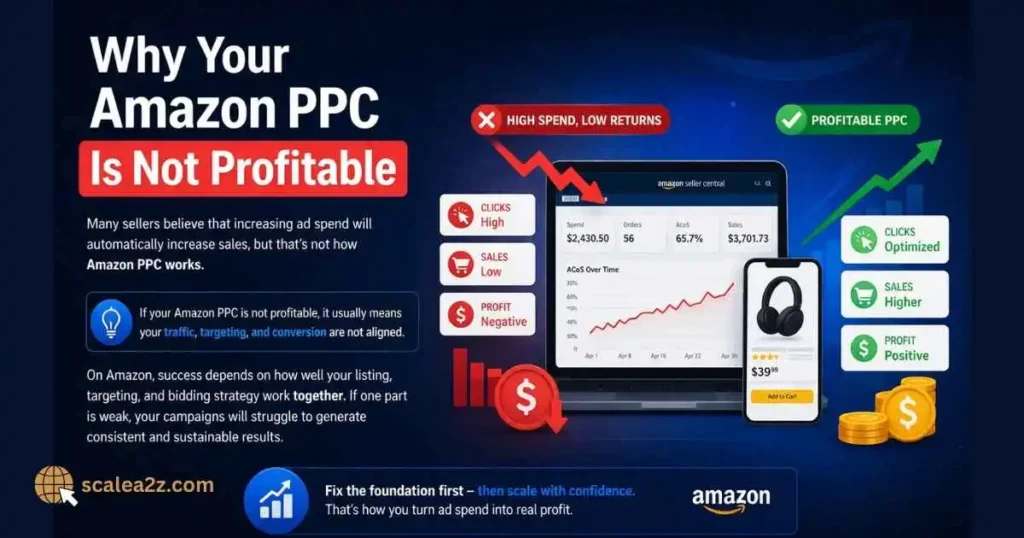
This issue often comes from weak fundamentals. Poor listing quality, irrelevant keyword targeting, and unstructured campaigns lead to Amazon ads failing to convert, even when traffic is consistently high. At the same time, many sellers focus only on surface-level metrics like ACoS and ROAS without understanding how these metrics affect actual profit. On Amazon, success depends on how well your listing, targeting, and bidding strategy work together. If one part is weak, your campaigns will struggle to generate consistent and sustainable results.
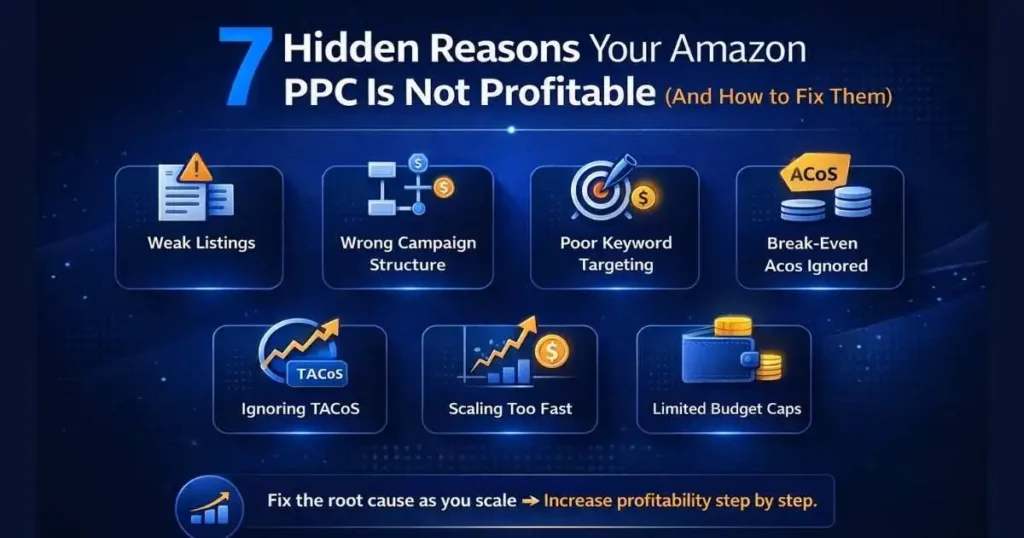
7 Hidden Reasons Your Amazon PPC Is Not Profitable
If your campaigns feel like they’re constantly spending without delivering results, there’s always a deeper issue behind it. Many sellers assume the problem is budget or competition, but in reality, most cases of Amazon PPC not profitable campaigns come down to structural and strategic mistakes. Let’s break down the most common reasons that silently drain your ad spend — and what’s actually happening behind the scenes.
Why Amazon PPC Fails to Convert
Driving traffic is only half the job. If your listing isn’t optimized, even highly targeted traffic won’t convert. Poor images, unclear titles, weak bullet points, or a lack of reviews can reduce your conversion rate significantly. This leads to Amazon ads not converting, even when clicks are consistent.
Wrong Campaign Structure Is Draining Your Budget
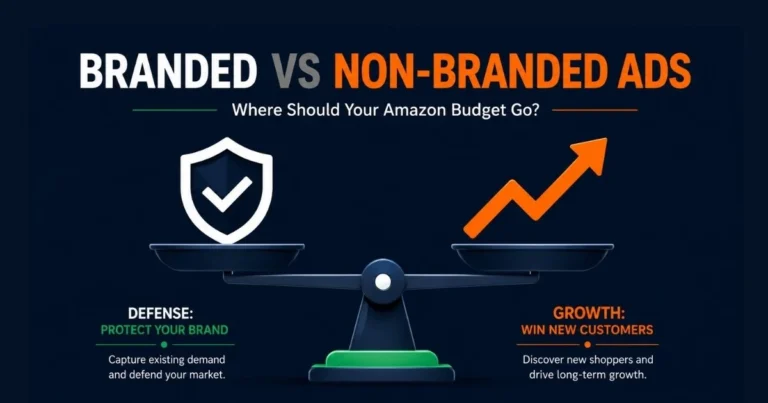
A common mistake is relying too heavily on one campaign type. Using only auto campaigns or mixing all keywords into one campaign creates confusion in the data. Without proper segmentation (branded, generic, competitor), your budget spreads inefficiently, and performance becomes unpredictable.
You're Targeting the Wrong Keywords
Not all traffic is good traffic. If your targeting includes irrelevant or low-intent keywords, you’ll attract clicks that never convert. This is one of the biggest causes of wasted spend. Regularly analyzing your search term report helps identify which keywords are bringing value and which are simply draining your budget.
Your Bids Ignore Your Break-Even ACoS
Many sellers set bids without understanding their margins. Without knowing your break-even point, you can easily overspend on clicks that can never be profitable. Metrics like ACoS should always be aligned with your product margins; you’re scaling loss instead of profit.
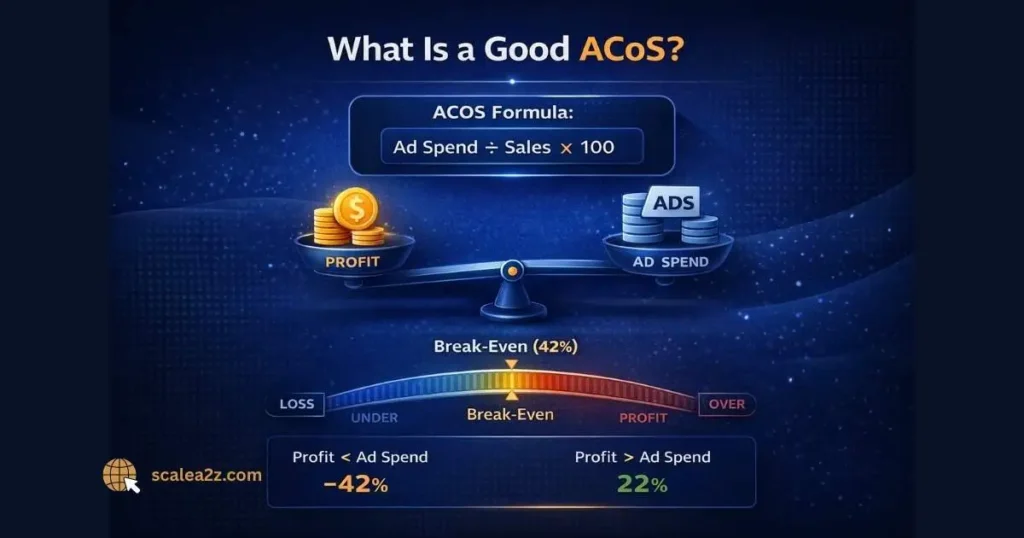
Here’s a simple example: If your product sells for $40, your cost is $15, and Amazon fees are $8, your net profit is $17 — which means your margin is 42%. So your break-even ACoS is also 42%. If your campaigns are running at 35% ACoS, you’re profitable. But if your conversion rate drops and ACoS climbs to 60%, you’re losing money on every sale — even if clicks are coming in.
You're Measuring ACoS but Ignoring TACoS
While ACoS shows ad efficiency, it doesn’t tell the full story. TACoS helps you understand the relationship between ad spend and total sales. If you only focus on ACoS, you might miss long-term growth opportunities or cut campaigns that are actually helping organic ranking.
Scaling Too Fast Before Data Is Ready
One of the biggest mistakes is making decisions too quickly. PPC data takes time to stabilize. If you increase budgets or change bids within 24–48 hours, you’re reacting to incomplete data. Proper optimization requires patience and consistent review cycles.
Budget Caps Are Limiting Your Sales Window
If your campaigns run out of budget early in the day, you miss valuable traffic later on. This is especially critical during peak shopping hours. Budget limitations can make it seem like your campaigns are underperforming, when in reality, they’re just not running long enough to capture demand.
How to Fix Amazon PPC Not Profitable Campaigns
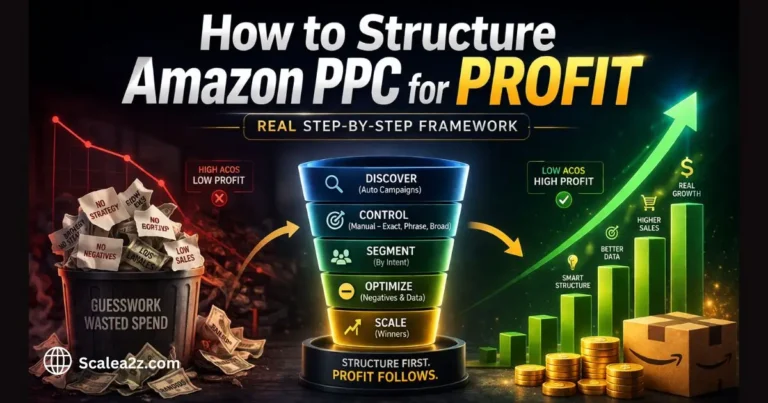
If your Amazon PPC not profitable, the solution isn’t to increase budget — it’s to fix the foundation. Most sellers try to scale too early without correcting the issues that are causing wasted spend. The right approach is systematic: identify problems, optimize key areas, and then scale based on data.
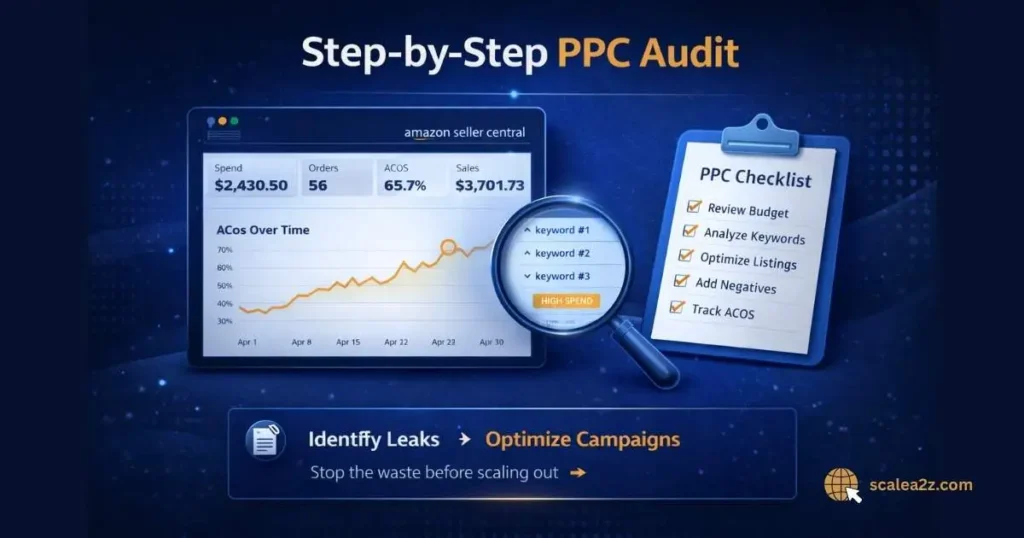
Step 1 — Audit Your Campaigns
Start by reviewing your campaigns inside Amazon Seller Central. Look at where your budget is going and which campaigns are underperforming. Identify keywords with high spend but no conversions — these are your biggest leaks. A proper audit helps you understand what’s working and what needs to be paused or optimized.
Step 2 — Optimize Keywords: Add Winners, Remove Losers
Your keyword strategy directly impacts performance. Focus on search terms that drive sales and move them into exact-match campaigns for better control. At the same time, remove or negate keywords that are bringing irrelevant traffic. This reduces wasted spend and improves overall efficiency.
Step 3 — Fix Your Listing Before Scaling Ads
Even the best campaigns won’t work if your listing doesn’t convert. Make sure your images are clear, your title is optimized, and your bullet points highlight key benefits. A strong listing improves the conversion rate, meaning you get more sales from the same traffic.
Step 4 — Improve CTR & Conversion Rate with Better Creatives
Click-through rate (CTR) and conversion rate (CVR) are critical for PPC success. Test different main images, improve your product positioning, and make your offer more compelling. Small changes here can significantly improve performance without increasing ad spend.
Step 5 — Use Smart Bidding Strategies
Bidding without a clear strategy often leads to losses. Your bids should be aligned with your margins and performance data. Instead of guessing, adjust bids based on what’s actually converting. Many teams, including ScaleA2Z, use AI-driven data analysis along with tools like Scale Insights to make smarter bid adjustments and improve efficiency over time.
Step 6 — Track Data and Optimize Consistently
PPC is not a one-time setup — it requires ongoing optimization. Review your data regularly, track performance trends, and make adjustments based on actual results. Consistency is what turns average campaigns into profitable ones.
What Is a Good ACoS for Profitable Amazon PPC?
A good ACoS varies based on your product margins and business goals. There’s no universal benchmark that fits every seller. In general, a lower ACoS indicates better efficiency, but profitability depends on how that number aligns with your actual costs and margins.
How to Calculate Your Break-Even ACoS
To find your break-even point, you need to understand your profit margin. This is the percentage you keep after all costs, including product, shipping, and fees. If your margin is 25%, your break-even ACoS is also 25%. That means you’re neither making nor losing money on ads. For example, if you spend $25 on ads to generate $100 in sales, your ACoS is 25%. Anything below this level is profitable, while anything above it means you’re losing money. This calculation helps you set realistic targets and avoid overspending.
When High ACoS Is Actually Acceptable
A high ACoS isn’t always a bad sign. In certain situations, like product launches or ranking campaigns on Amazon, a higher ACoS can help you gain visibility and drive long-term growth. The key is understanding the purpose behind your campaigns. If your goal is ranking or market entry, short-term losses can lead to long-term gains. But for established products, maintaining a controlled and profitable ACoS should always be the priority.
How to Scale Amazon PPC Without Losing Profit
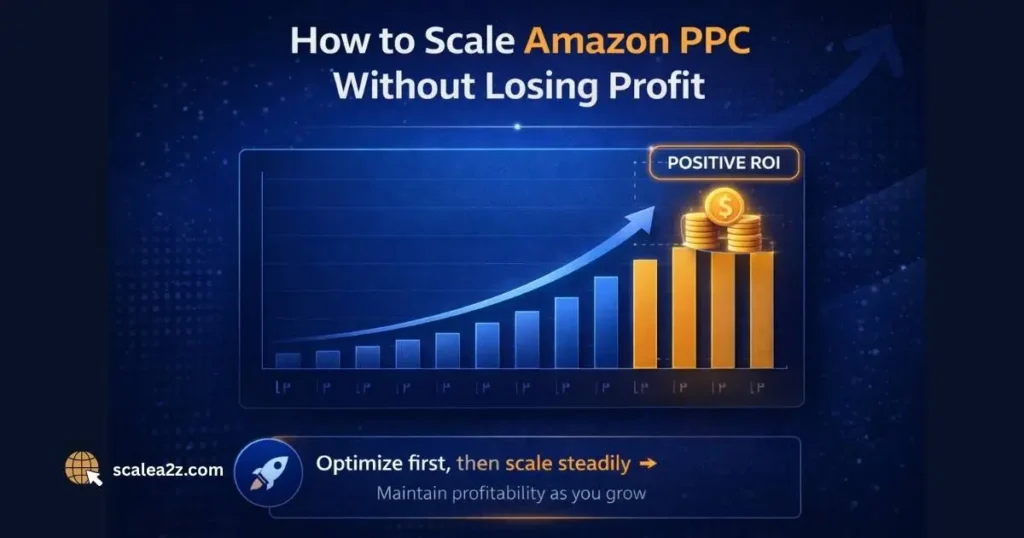
Scaling PPC campaigns isn’t about increasing budget blindly — it’s about growing strategically while maintaining efficiency. Many sellers increase spending too quickly and end up with Amazon ads not profitable, even if performance was stable before. The first step is to scale only what’s already working. Identify campaigns and keywords that are consistently generating sales at a healthy ACoS, then gradually increase their budget or bids. This ensures you’re building on proven results rather than taking unnecessary risks.
At the same time, maintain control over your targeting. Expanding into new keywords or audiences should be done carefully, with proper testing. Sudden expansion without data often leads to wasted spend and lower efficiency. Another key factor is monitoring performance regularly. As you scale, small inefficiencies can quickly turn into larger losses. Reviewing trends and adjusting bids based on real data helps maintain a balance between growth and profitability. Many experienced teams use AI-driven data analysis and automation tools to make smarter scaling decisions and improve overall campaign performance without sacrificing efficiency.
Two rules that top sellers follow when scaling:
- TACoS as your green light: If your TACoS is below 10% and total sales are growing, that’s a strong signal to scale. It means your ads are also improving organic ranking.
- Never increase budget by more than 20% at once: A sudden jump in budget can disrupt Amazon’s algorithm and cause ACoS to spike. Gradual increases keep performance stable and predictable.
Common Mistakes Even Experts Make
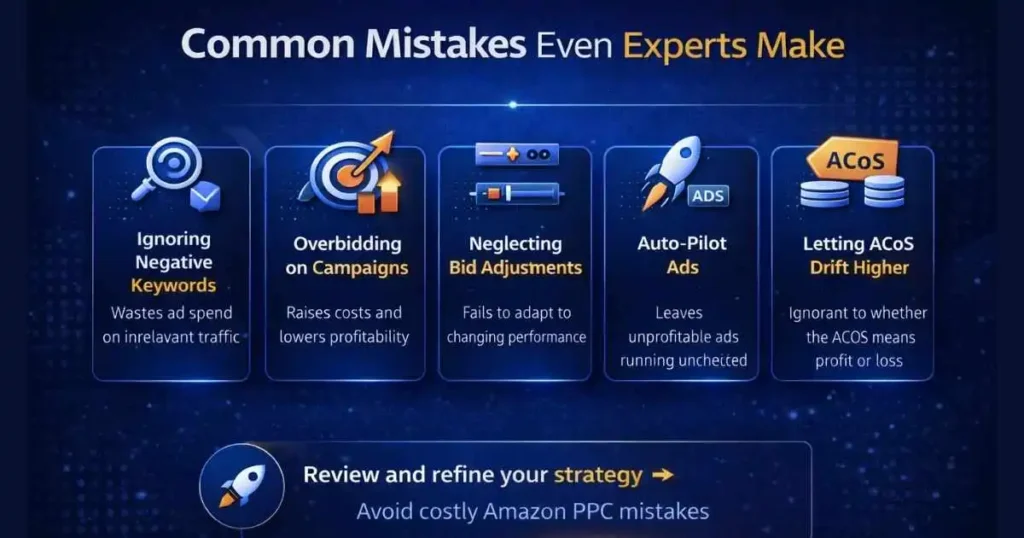
Even experienced sellers can struggle when small mistakes go unnoticed. These issues may seem minor at first, but over time, they lead to inefficient campaigns and reduced profitability.
Ignoring Listing Optimization Before Running Ads
Many sellers focus on ads without improving their product listings. Weak images, unclear titles, or poor descriptions reduce conversion rate. As a result, traffic increases, but sales don’t follow, leading to wasted ad spend.
Over-Relying on Automation Without Manual Oversight
Automation tools can improve efficiency, but relying on them completely is risky. Without regular manual checks, campaigns may continue targeting irrelevant keywords or overspending. Data still needs human analysis to make smarter decisions.
Scaling Without Testing First
Increasing the budget or expanding targeting without testing performance is a common mistake. What works at a small scale may not perform the same when scaled. Gradual testing helps maintain stability and avoid sudden losses.
Blind Scaling Based on ACoS Alone
Focusing only on ACoS can be misleading. A low ACoS doesn’t always mean growth, and a high ACoS isn’t always bad. Decisions should consider overall sales and long-term impact.
When to Hire an Amazon PPC Agency — Why ScaleA2Z
Managing Amazon PPC campaigns can become overwhelming as your account grows. Here are three clear signs it’s time to bring in expert support:
- You’re spending 5+ hours every week on campaigns, but ACoS is still not improving
- Your monthly ad spend is above $3,000, but returns remain inconsistent
- You’re launching new products but struggling to gain ranking and visibility
If any of these sound familiar, continuing to manage campaigns manually may be costing you more than hiring an expert team. Many sellers reach a point where handling campaigns manually becomes inefficient and time-consuming.
An experienced team can help identify gaps, improve targeting, and optimize performance based on real data. At ScaleA2Z, the focus is on using AI-driven data analysis along with tools like Scale Insights to make smarter bid adjustments and improve overall efficiency. Instead of guesswork, decisions are based on performance trends, helping you move toward more stable and scalable results.
Get a free PPC audit from ScaleA2Z — no commitment, just clear data-backed insights on exactly what’s holding your campaigns back.
Final Thoughts
If your Amazon PPC not profitable, the issue is rarely about spending more — it’s about fixing what’s not working underneath. Without the right structure, even high budgets will continue to deliver inconsistent results. Strong campaigns are built on clear targeting, optimized listings, and data-driven decisions. When these elements work together, your ads become more efficient and start generating consistent returns instead of draining your budget.
Instead of chasing quick wins, focus on long-term improvements. Small changes in conversion rate, keyword selection, and bidding strategy can significantly improve overall performance over time.
👉 If you want to identify exactly what’s going wrong, you can request a free PPC audit from ScaleA2Z and get clear, data-backed insights to improve your campaigns.

Amazon PPC Not Profitable FAQs
Why is my Amazon PPC spending but not making a profit?
This usually happens when your campaigns are driving traffic but not converting into sales. Common reasons include poor listing quality, irrelevant keyword targeting, or weak campaign structure. If your conversion rate is low, even well-targeted traffic will not generate profit.
What is a good ACoS for Amazon PPC?
A good ACoS depends on your product margins. For most sellers, staying below their break-even ACoS ensures profitability. However, during product launches or ranking phases, a higher ACoS can be acceptable for gaining visibility.
How long does it take for Amazon PPC to become profitable?
PPC campaigns usually take time to stabilize. In most cases, it can take 2–4 weeks to gather enough data for optimization. Consistent adjustments based on performance data are key to improving results over time.
Should I pause Amazon PPC if it's not profitable?
Pausing campaigns immediately is not always the best solution. Instead, identify what’s causing inefficiency and optimize it. Removing poor-performing keywords, improving your listing, and adjusting bids can often fix the issue without stopping traffic completely.
What is break-even ACoS, and how do I calculate it?
Break-even ACoS is the point where your ad spend equals your profit margin. If your margin is 30%, your break-even ACoS is also 30%. Staying below this level means you’re making a profit, while going above it leads to losses.