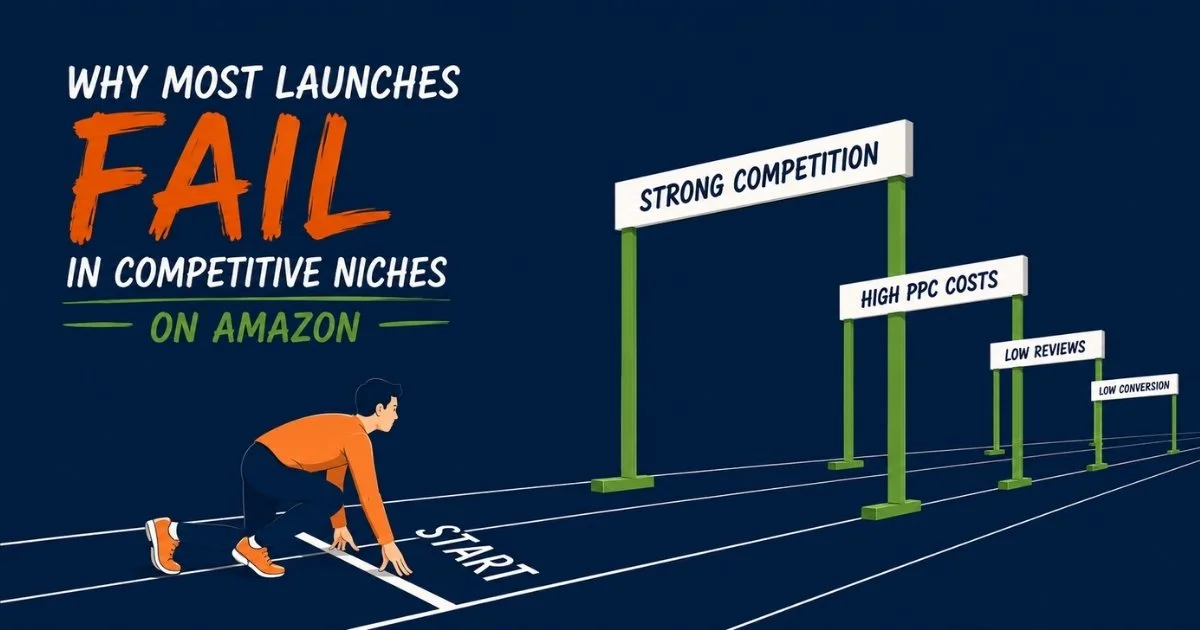
Why Most Launches Fail in Competitive Niches on Amazon
This isn’t a launch-mistake problem. It’s a competitive environment problem. Keyword research was solid, the listing was optimized, PPC went live on day one, and Brand Registry was set up before launch. Three weeks in, impressions are decent, but the sales velocity that’s supposed to push you up the rankings never shows up.
Most launch guides assume every niche behaves the same way once you follow the steps correctly. Competitive Amazon niches don’t work that way. When ten established sellers with thousands of combined reviews are already defending the same search terms, doing everything correctly still isn’t enough, because the market you entered was never a fair fight to begin with.
That’s the gap this guide fills. If you’re wondering why most launches fail in competitive niches, the answer usually has less to do with launch execution and more to do with entering a market where established competitors already control visibility, reviews, and shopper trust.
We’re not repeating the full process of how to launch a new product on Amazon; we’re covering why correctly executed launches still stall the moment they enter a saturated category and what separates sellers who push through from those who quietly give up by month two.
At ScaleA2Z, much of what we do before a client launches is data-driven category analysis, not just listing setup, because the environment usually determines the outcome more than the execution does.
Not sure how competitive your target category actually is?
Table of Contents
Why Some Amazon Launches Succeed While Others Stall
Launch success depends less on flawless execution and more on the competitive environment you’re entering. A well-executed launch in a moderate category can outperform a technically perfect launch in a saturated one, because in a saturated niche, correct execution only gets you to the starting line. The incumbents decide how hard that line is to cross.
Launching correctly does not guarantee demand
Following every step in a launch checklist gets your listing live and indexed. It does not guarantee that Amazon’s algorithm rewards you at the same speed it rewards a seller in a less contested category. Correct execution is table stakes, not an advantage, once you’re in a competitive niche.
Competition changes the rules after launch
In a quiet category, early sales velocity and a handful of reviews are often enough to start climbing. In a competitive one, the sellers you’re competing against are actively defending their positions, adjusting bids, running deals, and refreshing listings in response to new entrants. Your launch is not happening in a static market. It is happening against sellers who may notice a new entrant and adjust their pricing, promotions, or advertising.
What "competitive niche" actually means
A niche becomes highly competitive when leading listings hold a large review advantage, core keyword CPCs remain high, paid and organic placements are concentrated among a small group of sellers, and pricing leaves limited room for a new entrant.
Demand alone does not make a niche competitive. It only proves that the market is real. It’s demand plus an entrenched field already capturing it that makes it competitive.
Quick Tip: Check your actual target keyword, not the category label. A category can look moderate at a glance and still be brutally competitive on the two or three search terms that drive most of its volume.
The Biggest Reasons Most Launches Fail
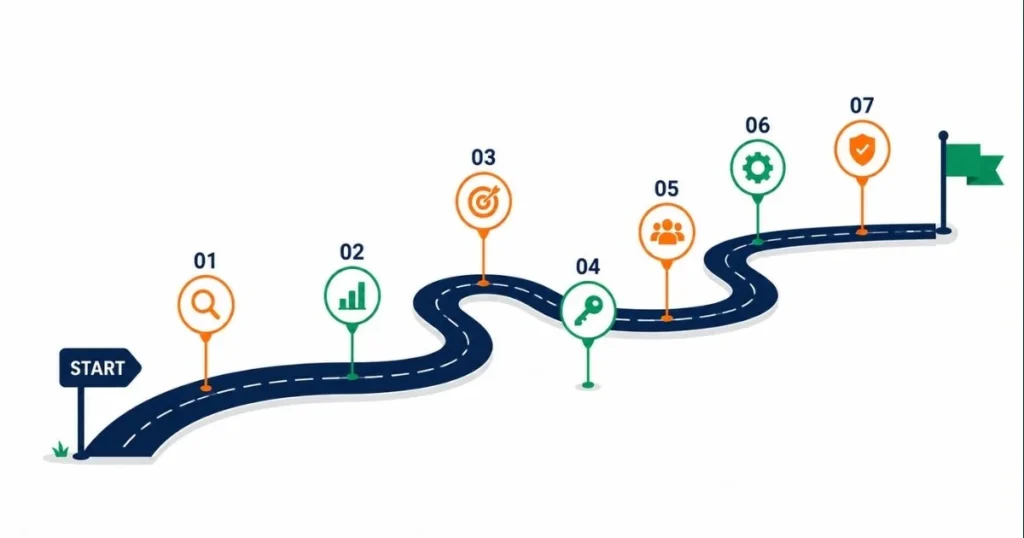
Most sellers assume a stalled launch means the product is wrong. In a competitive Amazon niche, the product itself may not be the only problem. More often, the launch stalls because the product, offer, budget, and competitive environment were not evaluated together. Execution gaps in seven specific areas are usually why most launches fail in competitive niches even when the checklist was followed.
| Failure Point | What It Looks Like | Why It Hurts More in Competitive Niches |
|---|---|---|
| Poor differentiation | Listing looks like every other option in the category | Shoppers default to the incumbent they already trust |
| Saturated keyword market | Core terms dominated by high-review listings | You pay top CPC for placements you rarely win |
| Weak pricing strategy | Priced to match, not to justify a switch | Price alone won't beat an established reputation |
| Insufficient review velocity | Reviews trickle in slower than category norm | The trust gap versus competitors stays visible |
| Underfunded PPC | Budget sized for a moderate category | Spend depletes before ranking signals build |
| Low conversion despite impressions | Traffic arrives, sales don't follow | Weak conversion can reduce the listing's ability to build sustained sales and organic visibility |
| Inventory problems | Stockouts in weeks 2 to 4 | Resets the sales velocity you just started building |
Poor product differentiation
A listing that looks and reads like the top five competitors gives a shopper no reason to switch. In a saturated Amazon category, sameness is the default; differentiation has to be deliberate.
Entering a saturated keyword market
If your core keyword is already owned by listings with thousands of reviews, ranking for it organically takes longer and costs more through PPC than most launch budgets account for.
Weak pricing strategy
Pricing to simply match the category rarely moves a buyer who already trusts an established seller. In a competitive niche, your price must support a clear value argument. That may mean a lower introductory price, a stronger bundle, better unit economics for the shopper, or a visibly justified premium position.
Insufficient review velocity
Shoppers often compare review count, rating, and recent feedback before trusting a new listing. When competitors continue collecting reviews faster, the visible trust gap can remain open longer than the launch budget allows.
Launching without enough PPC budget
A budget that works in a moderate category burns out fast in a competitive one, because CPCs on the terms that matter are already inflated by sellers defending their position.
Budget size is only part of the issue. The campaigns also need a clear separation between discovery, testing, ranking, and profitable targets. This Amazon PPC structure for profit explains how to organize those campaign roles without mixing every keyword into the same setup.
Low conversion despite impressions
Getting seen isn’t the same as converting. If impressions are healthy but sales aren’t following, the listing itself, not the traffic, is usually the leak. Use the symptoms in our guide to an Amazon listing that isn’t converting to check the offer, images, copy, reviews, and buying friction before increasing traffic.
Inventory problems during launch
Running out of stock in weeks two through four can interrupt sales momentum, advertising continuity, and the organic visibility the listing was beginning to build.
The Hidden Costs of Launching in Competitive Niches
Beyond the seven execution points above, competitive niches carry structural costs that exist even when nothing goes wrong.
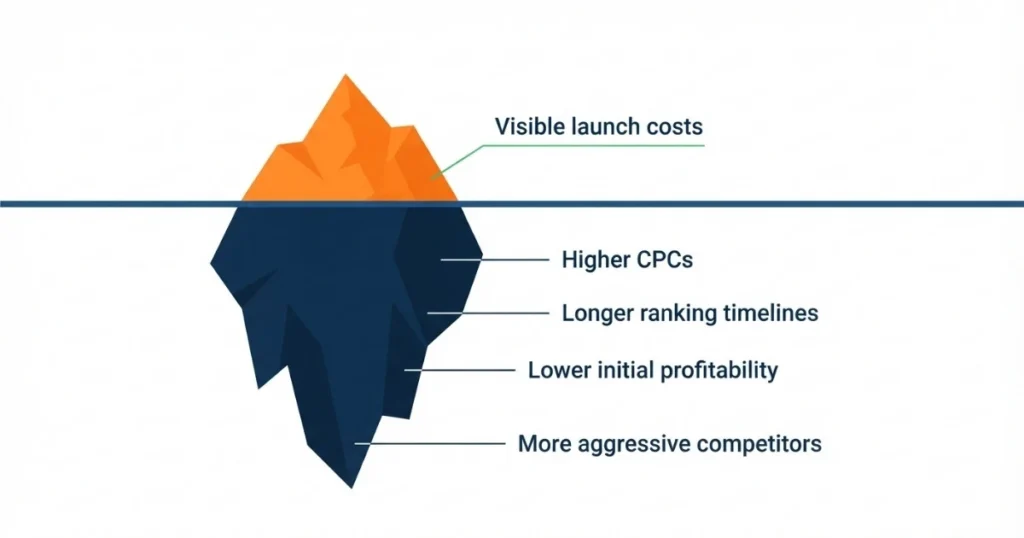
Higher CPCs
Sponsored Products top-of-search placements are often dominated by sellers with the budget and sales history to defend them. Your campaigns may compete for those placements, and cost-per-click climbs without matching conversions, because your listing carries none of the trust signals shoppers are using to decide.
Longer ranking timelines
In a quiet category, meaningful organic movement can show up in a few weeks. In a competitive one, the same sales velocity has to work harder to move you past sellers with years of accumulated ranking signals, which stretches the timeline.
Lower initial profitability
Higher CPCs and slower organic pickup mean a longer stretch of the launch running near breakeven or at a loss before it turns profitable.
More aggressive competitors
Established sellers in a competitive niche often notice new entrants and respond, through pricing moves, coupon pushes, or bid increases, in ways that a quieter category’s sellers rarely bother to.
Why PPC Alone Cannot Save a Weak Launch
Understanding why most launches fail in competitive niches is important before increasing your PPC budget. A common instinct when a launch stalls is to raise bids and push more money into ads. That fixes a traffic problem, not the underlying issues that prevent sustainable growth.
Traffic without conversion wastes budget
More impressions on a listing that isn’t converting just means more money spent proving the same point. If shoppers are clicking and leaving, the fix is on the page, not in the bid.
Ranking depends on sales quality
Click volume alone does not build sustainable ranking momentum. A launch needs clicks to turn into consistent purchases, because sales performance and relevance signals determine whether visibility can continue after the initial ad push.
When higher bids actually hurt performance
Pushing bids higher to “win” placements in a saturated keyword market without first fixing conversion just accelerates the spend. You get to the same weak result faster and with less budget left to try something else.
Quick Tip: Before increasing any bid in week two or three, check Unit Session Percentage first. Compare it with your own pre-launch expectations, historical conversion data, and similar ASINs where available. If traffic is rising but conversion remains weak, fix the listing or offer before increasing PPC spend.
How Winning Sellers Prepare Before They Launch
The sellers who push through a competitive niche usually did the harder work before day one, not during it.
Validate demand before inventory
Confirm real search volume and buying behavior for your specific keyword, not just the category, before committing to inventory. A category can look promising while the exact terms you need to rank for are already saturated.
Study competitor positioning
Compare Sponsored Products visibility alongside organic rankings, then review how your targeting and search-term coverage are structured. Amazon’s official Sponsored Products targeting guide explains the targeting options available before you decide that bids alone are the problem.
A keyword dominated by the same sellers in both placements usually requires a larger launch budget and a longer ranking timeline. Read the two- and three-star reviews across the leading competing listings. Focus on repeated complaints, missing features, packaging issues, and expectations that current products are not meeting. That’s where you find the gap shoppers are already asking someone to fill.
Identify gaps instead of copying listings
Matching what already ranks puts you in direct competition on every trust signal an incumbent already owns. A clear point of difference, whether that’s format, bundling, or an unmet complaint from competitor reviews, gives shoppers an actual reason to choose you.
Forecast realistic launch costs
Sellers building the full investment plan should also review how much budget it takes to start selling on Amazon, including inventory, fees, creative work, and advertising.
Build the forecast around the full cost stack, including referral fees, FBA fulfillment fees, inbound shipping, storage, expected returns, discounts, and launch PPC. Size the advertising budget using the category’s actual CPC and a realistic conversion estimate, not a generic launch number. A budget designed for a moderate category will not survive a genuinely competitive one.
Forecast the complete launch investment before ordering inventory. If the numbers only work under perfect conditions, the product probably isn’t ready for a competitive niche.
How ScaleA2Z Helps Brands Launch More Strategically
Getting these calls right before launch usually comes down to having the right data in front of you before the first dollar is spent, not reacting after week three.
ScaleA2Z’s process before a client launches typically includes keyword-level CPC and competitor research, review growth analysis against the leading listings, and conversion-risk analysis on the planned listing and offer.
Once live, we combine AI-assisted data analysis with human-led bid adjustments and launch monitoring, so budget shifts are based on what the account is actually showing, not a fixed schedule. Listing optimization and periodic launch performance reviews continue through the ranking window, since a competitive niche rarely stays static for long.
None of this replaces a strong product. It reduces the chance of finding out too late that the category, budget, or positioning was wrong from day one.
Questions to Answer Before Entering a Competitive Niche
Answer these honestly before committing inventory. If more than two answers are “no” or “not sure,” the niche needs more preparation, not more budget.
| Question | Why It Matters |
|---|---|
| Can you compete on value, not just price? | Price alone rarely beats an established seller's trust |
| Can you afford launch PPC at this category's real CPC? | Generic budgets fail fast in saturated keyword markets |
| Is your differentiation obvious within 3 seconds of viewing the listing? | Shoppers won't read deep enough to find a subtle advantage |
| Can your inventory support 8 to 12 weeks of consistent stock? | Stockouts reset the ranking signals you're building |
| Do you have a policy-compliant plan to generate early sales and request reviews? | Slow reviews keep the trust gap visible longer |
| Is your pricing sustainable after Amazon fees and ad spend? | A price that only works on paper won't survive real costs |
Signs You Should Delay the Launch
Sometimes the right move is not launching yet.
Margins are already thin
If the math barely works before ad spend is even factored in, a competitive niche’s higher CPCs will likely push the SKU underwater.
No meaningful product advantage
If differentiation isn’t clear before launch, it won’t become clear after. Delay until there’s a genuine reason for a shopper to pick you over the incumbent.
Demand exists but competition dominates
Strong search volume with two or three brands controlling most top organic positions, Sponsored Products placements, reviews, and category sales is a sign that demand is real but concentrated. Entering without a plan to compete for that specific keyword usually means burning budget for very little.
Inventory planning is incomplete
Launching before your supply chain can support 2 to 3 months of consistent stock risks losing momentum right when it starts to build.
Launch timing misses the demand window
Launching a seasonal product after demand has already peaked puts a new listing behind established competitors before the campaign begins. By the time the listing collects enough sales and review momentum, search demand may already be declining. Either launch early enough to build visibility before peak demand or delay the product until the next realistic selling window.
What to Fix First When a Competitive Launch Stalls
A slow launch does not mean every part of the strategy is broken. The mistake is changing bids, pricing, images, keywords, and inventory plans at the same time. That removes your ability to identify what caused the improvement or decline.
Start with the point where the customer journey is breaking. Diagnose visibility first, then clicks, conversion, profitability, and inventory. Fixing the earliest weak point usually improves every metric that follows it.
| What You See | Most Likely Problem | What to Check First | First Action |
|---|---|---|---|
| Impressions are low | Weak indexing, narrow targeting, or bids below the market | Indexed keywords, search term coverage, and placement data | Improve keyword relevance and expand controlled targeting |
| Impressions are healthy but CTR is low | Main image, title, price, or offer fails to earn the click | CTR by campaign, placement, and target keyword | Test the main image and strengthen the visible offer |
| CTR is healthy but conversion is low | Listing, reviews, price, delivery promise, or product positioning | Unit Session Percentage, competitor offers, and detail-page quality | Fix the listing and offer before increasing bids |
| Sales are coming but PPC is unprofitable | Targeting is too broad or bids exceed economic limits | Search term report, ACoS, break-even ACoS, and placement spend | Reduce waste and isolate converting search terms |
| Paid sales improve but organic rank stays flat | Sales are spread across weak or unrelated keywords | Keyword-level sales and organic position changes | Concentrate spend on a smaller set of strategically important terms |
| Performance improves but stock is running low | Inventory was not aligned with launch velocity | Sell-through rate, lead time, and days of cover | Protect availability before scaling traffic further |
Fix the earliest broken stage first
If impressions are weak, changing the product detail page alone will not create enough traffic to test conversion. If clicks are healthy but purchases are weak, raising bids only sends more expensive traffic into the same conversion problem. Diagnose the sequence instead of treating every slow launch as a PPC issue.
Use a controlled 14-day recovery window
Choose one primary problem, make the smallest meaningful correction, and give the change enough traffic to evaluate. Track the affected metric against a stable baseline. Avoid rebuilding the entire campaign or listing unless the data shows that the underlying setup is fundamentally wrong.
Quick Tip: Do not judge a recovery by sales alone. A better CTR, a stronger Unit Session Percentage, lower wasted spend, or improved organic rank may indicate that the launch is moving in the right direction before total sales increase materially.
How to Measure Whether Your Launch Is Recovering
Recovery should be measured as a sequence, not through one headline number. A launch may still be improving even when total sales remain below target, provided click-through rate, conversion, keyword visibility, and wasted ad spend are moving in the right direction.
Compare each metric against the period before your most recent change. Do not label a launch recovered because one good day lowered ACoS, and do not label it failed because one metric stayed flat while earlier stages of the funnel improved.
| Metric | Healthy Direction | Warning Sign |
|---|---|---|
| Impressions | Growing on relevant targets | Rising only on irrelevant or broad traffic |
| CTR | Improving after image, title, or offer changes | Falling while impressions rise |
| Unit Session Percentage | Stable or improving with qualified traffic | Declining as traffic increases |
| ACoS | Moving toward break-even targets | Rising without stronger sales or ranking |
| TACoS | Gradually declining as organic sales grow | Staying high after paid sales increase |
| Organic keyword rank | Improving on priority keywords | Flat or falling despite sustained sales |
Competitive Launch Checklist
Before you go live, confirm each of these is in place, not just planned:
- Market demand validated on the exact keyword, not just the category
- Keyword-level CPC checked against your ad budget
- Pricing tested against the leading competing listing
- Break-even ACoS calculated before launch
- Review-generation plan set up (Vine, Request a Review, or both)
- 8-12 weeks of inventory confirmed with your supplier
- PPC budget sized to the category’s real CPC, not a generic number
- Listing images and copy tested against competitor objections
- Differentiation visible within 3 seconds of viewing the listing
- Conversion tracking ready so you can diagnose week one, not week four
- Profit margin still works after Amazon fees and advertising
Conclusion
Why most launches fail in competitive niches isn’t because Amazon launches no longer work. It’s because sellers underestimate how difficult it is to compete against established products without a clear competitive advantage.
In a competitive niche, preparation and execution cannot be separated. Strong keyword research, a polished listing, and launch PPC only work when the product, positioning, budget, review plan, and inventory strategy fit the market being entered.
Continuous monitoring determines whether the launch gains momentum or quietly stalls after the first few weeks. Before increasing ad spend or changing every part of your strategy, identify where the launch is actually breaking down. The right diagnosis usually saves more time and budget than reacting to every disappointing metric.
If you’re preparing to enter a competitive Amazon niche or trying to recover a launch that isn’t performing as expected, ScaleA2Z can help you evaluate your category, competition, listing, and PPC strategy before more budget is wasted. Our 90-day Amazon growth plan covers the same rebuild sequence in more depth if the launch needs a longer runway to recover.
Frequently Asked Questions
Why do most Amazon product launches fail in competitive niches?
Most launches fail because sellers enter highly competitive markets without enough differentiation, budget, review momentum, or conversion strength. A technically correct launch can still struggle if established competitors already dominate the keywords and shopper trust.
How can I tell if an Amazon niche is too competitive?
Look beyond search volume. Review the leading products for review advantage, pricing, Sponsored Products saturation, keyword CPCs, listing quality, and control of top organic positions. A niche is likely highly competitive when the same sellers dominate both paid and organic visibility and leave little room on price or differentiation.
Should I avoid launching products in competitive Amazon categories?
Not necessarily. A competitive niche can still be profitable if your product offers a meaningful advantage, your pricing strategy is sustainable, and your launch budget matches the category’s actual competition. The goal is to compete with a clear strategy rather than entering the market unprepared.
Can Amazon PPC alone make a competitive launch successful?
No. PPC can generate visibility, but it cannot compensate for weak conversion rates, poor differentiation, limited reviews, or an uncompetitive offer. Fixing the listing and overall customer experience is often more effective than simply increasing bids.
How long does it take to rank in a competitive Amazon niche?
There is no fixed timeline. Ranking depends on factors such as competition, sales velocity, conversion rate, review growth, keyword relevance, and advertising performance. Competitive niches generally require more consistent sales and a longer optimization period than lower-competition categories.
What should I measure after launching a product on Amazon?
Track impressions, CTR, Unit Session Percentage, ACoS, TACoS, priority-keyword rankings, policy-compliant review growth, and inventory cover. Read them as a sequence: relevant impressions should produce clicks, clicks should produce purchases, and paid sales should gradually support stronger organic performance.